Safety News

What causes racking to collapse

150 150 IRIA

What causes racking to collapse?

There are a number of different factors that could result in a racking collapse. The cause might not be a single factor, but can be a number of combined factors which ultimately weaken the structure to a point where it collapses.

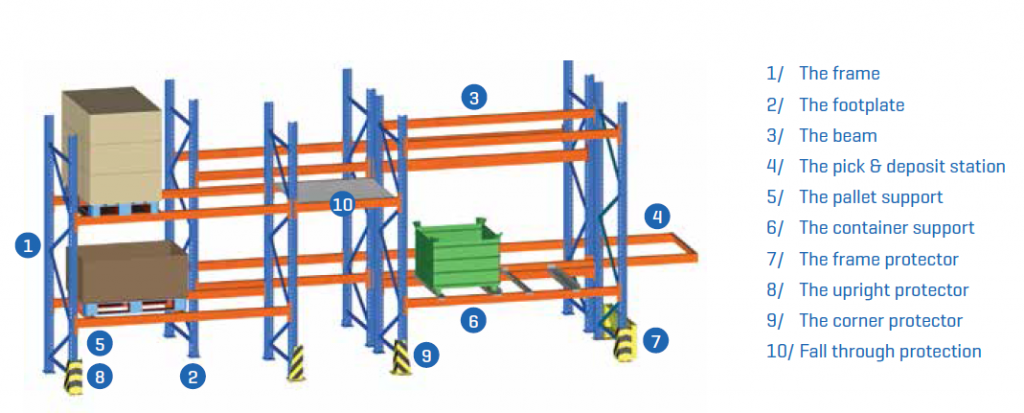
The most widely used racking type is adjustable pallet racks (APRs). The main components of this racking system are the racking frame, which usually consist of two uprights and diagonal supports, and the pallet beams, which are supported by the frames. Image below .

The design of the uprights is such that they are slender members, making them very strong in compression but susceptible to buckling. This type of racking transfers the loads on the pallet beams, caused by the weight of the goods stored on the racking, through the uprights to the floor. If an upright is damaged, installed incorrectly, or moves in such a way that the downwards forces act eccentrically relative to the upright, then it is prone to failure due to buckling.

The main causes of racking collapses are;

  • Inadequate design;
  • Incorrect installation;
  • Overloading at pallet locations;
  • Damage
  • Mechanical handling equipment (MHE) impacts;
  • Supporting floor failure;
  • Environmental or chemical deterioration;
  • Change of configuration away from that for which the racking was designed;
  • Poor weight distribution on pallets, or pallet failure.

The Risk of Warehouse Rack Collapse

150 150 IRIA

Warehouses can be great places to work as long as they are safe. The use of forklifts, other heavy machinery and the misuse of racking systems can lead to a rack collapse. Even the most skilled forklift drivers occasionally bump into the racks which can damage their structural integrity. However, the proper use of rack guards and basic warehouse safety, can greatly minimize the chance of a rack collapse.

It is difficult to determine the probability of a rack collapse because every warehouse is different and there are multiple variables involved in each incident such as the speed of the vehicle, the type of rack, what is on the rack and more. Having properly installed rack guards helps to significantly decrease the chance of rack failure and helps prevent a domino effect that could potentially bring down every rack in a warehouse.

Warehouse racks are carefully engineered structures capable of holding large loads and massive amounts of products. If one part of the rack gets damaged, the integrity of the entire structure could become compromised.

Racking systems can collapse for many reasons such as overloading the racks beyond the manufacturer’s specifications, lack of maintenance and the most common reason: forklift impact. About 90 percent of rack failure can be attributed to forklift impact, says MJ Thomas, marketing and public relations specialist, Sentry Protection Products, Lakewood, Ohio.

Forklifts are going to hit racks, it’s simply part of working in a warehouse. In fact, nearly 20,000 workers are injured in forklift accidents each year. To minimize the impact of forklift collision and decrease the chance of a rack collapse, distributors protect the vulnerable areas of the racks. This is where rack guards can make all of the difference.

Author:   Angelica Dudenhoefer of Angelica Communications.

Securing Dyna Bolts to Base Plate of Racking

150 150 IRIA

The installation of dyna bolts for pallet racking should be installed using the racking manufacturers guide lines that have been predetermined by qualified engineers.

The dyna bolts are normally installed using the following procedure:

Using the holes in the base plate as a template, carefully drill holes using a hammer drill and masonry bit. The drill bit diameter should be the same diameter as the dyna bolt.

Insert the dyna bolt into the hole, be sure to place the washer and thread the nut a couple of turns. Not fully threading the nut protects the threads of the wedge anchor.

Insert the dyna bolt into each hole through the baseplate of the upright of the pallet racks.

Carefully hammer the anchors into each hole ensuring that they are installed to the desired depth.

Tighten all the nuts using a torque wrench to ensure they are tightened to the required torque value.

It is important to keep safety in mind and follow the pallet racking manufacturer’s instructions carefully. It is paramount that safety goggles are worn, handle all tools with extra care, and follow all technical specifications. This article is meant to serve as a basic overview of the steps for completing this project. Always refer to the manufacturer’s instructions or consult a qualified expert like IRIA (Independent Racking Inspections & Audits).

Source:   IRIA – Racking Safety Specialists


ISO 45001 Now Published

150 150 IRIA

ISO 45001:2018, Occupational health and safety management systems – Requirements with guidance for use is now published.

The new International Standard for occupational health and safety provides a robust and effective set of processes for improving work safety in global supply chains. It is designed to help organisations and is expected to reduce workplace injuries and illnesses in the world.

With almost 7,700 persons dying of work-related diseases or injuries daily (2017 calculations by the International Labour Organisation), ISO 45001 hopes to provide governmental agencies, industry and other affected stakeholders with effective, usable guidance for improving worker safety in countries around the world.

David Smith, Chair of project committee ISO/PC 283 that developed ISO 45001 says the new International Standard will produce significant changes in workplace safety.

“It is hoped that ISO 45001 will lead to a major transformation in workplace practices and reduce the tragic toll of work-related accidents and illnesses across the globe,” he said.

“World standards writers have come together to provide a framework for a safer workplace for all, whatever sector you work in and wherever you work in the world.”

According to a media statement by Standards Australia, “Australia already has a robust and long-standing workplace health and safety legislative framework, and voluntary document, AS/NZS 4801:2001, Occupational health and safety management systems – Specification with guidance for use. This joint Australian and New Zealand Standard remains current in this area. Complying with an International Standard in this area is a decision to be made by the individual business manager after considering their position and business, at the same time as their legislative requirements.”

Standards Australia said further discussion will be required to evaluate the compatibility of the International Standard within the Australian regulatory framework.

“Standards Australia is committed to working with all stakeholders to determine the most suitable way of utilizing this new international standard in Australia.”

ISO 45001 will replace OHSAS 18001, which is the world’s former reference for workplace health and safety. The new International Standard can be purchased from the national ISO member or through the ISO store.

Author:     Haydee

Source: www.safetyculture.com.au

New campaign to improve work health and safety in NSW launched

150 150 IRIA

SafeWork NSW has launched a new campaign to ensure workers and employers are safe while doing their jobs.

The $.32 million campaign, “Safety starts with you” has been developed to improve workplace safety and reduce injuries and illnesses among NSW workers.

SafeWork NSW Group Director, Regional Operations and Sector Initiatives, Tony Williams said the new campaign aims to encourage workers and businesses to tackle safety in the workplace.

“No matter your occupation, industry or background, safety is everyone’s responsibility,” said Mr. Williams.

“When you are injured at work, it doesn’t just affect you, it affects your family, friends and can also have an impact on your community.

“Through the campaign, we want workers to think about what might happen if they’re injured at work and look at changing their behaviour.”

The campaign features TV, print and radio ads focusing on high-risk industries and work activities.

The campaign is part of SafeWork NSW’s Work Health and Safety Roadmap for NSW 2022

Author:     Haydee

Source:     www.safetyculture.com.au

Most common questions asked regarding racking

150 150 IRIA

How often should I get my racking inspected?

There are numerous global standards relating to racking, however they all recommend racking be inspected at least once a year.

Why should I get my racking inspected?

Poorly maintained racking can collapse and kill people. However it is not only loss of life that results from racking collapses. Other side effects include:

  • Inability to service your clients
  • Potential legal action by workers, the public and your clients
  • Costs involved in replacement of collapsed racking and the loss of business

Why should I get my racking inspected by IRIA and not the manufacturer?

Getting your racking inspected by an independent company such as IRIA ensures the most economical means of maintaining your racking.

IRIA will inspect all brands of racking, this is especially important if you have multiple brands  on your site. In general manufacturers will only inspect their own brand.

IRIA has no interest in selling you racking and therefore we will not recommend repairs that are not necessary. In general the inspectors for the racking manufacturers are also their sales people.

How do I arrange a racking inspection?

Contact our office either via email or phone & speak to our friendly staff. They will have a brief chat to you about your requirements and gather some information on the number of sites you would like inspected and their size (usually by the number of bays of racking). They will then provide you with a quote and a proposed inspection date.

What happens on the day of the inspection?

On the day of the inspection our inspector will arrive and upon induction to your site they are able to work independently for the duration of the inspection. At the completion of the inspection they will go through their findings with you and answer any questions.

When will I receive my report?

Your Inspection Report will, in general, be emailed to you within 24 hours of completion of the inspection. There are some circumstances where this may be up to 48 hours.

Can I inspect the racking myself?

Staff on site should be completing a regular visual check of the racking and reporting any damage to the relative person. However a thorough inspection by a qualified inspector should be completed at least annually.

Why do I need Safe Work Load Charts?

Safe Work Load Charts are necessary to instruct your MHE (Materials Handling Equipment) drivers on the acceptable loads for each beam within your facility. They also provide information on correctly placing loads on beams. They are an aide to avoiding the overloading of beams and placing too much strain on the racking system overall.

How much will it cost to get my racking inspected?

It depends on the size and location of your facility. Email us for a quote.

How do I manage the repair process?

With our iRAT  management tool you can manage your inspection & repair process online. Once your chosen repairer has completed any repairs you can tick them off your online report. At your next scheduled inspection, our inspector will check that the repairs have been done and certify them as complete.

How do I make sure all of my sites are compliant with their racking?

With our iRAT system you can view inspection reports for all of your sites. You can choose to receive a weekly email from us to advise which repairs remain outstanding and you have access to multiple reports including which sites have the most damage,  how are the repairs tracking, how long are they taking to get done etc.

You can elect to have multiple people receiving reports, alert emails etc.

Do I need to get my shelving inspected?

Shelving should be inspected in line with steel storage racking. There are a number of potential differences that need to be considered including the floor fixings, shelving materials and stability.

What happens if my staff have been adjusting my racking?

The adjustment of racking including beam levels can in some instances impact upon the load carrying capacity of a racking system. If you are not sure contact IRIA for advice.

Source:   www.iria.com.au

Racking Safety Concerns

150 150 IRIA

An inspection program carried out by WorkSafe Western Australia in the wholesale industry has highlighted “serious” concerns with the safety of racking.

The inspection program was carried out over the 2015/16 financial year in both metropolitan and regional areas.

It involved visits to 127 workplaces to look at a range of hazards faced by workers in the wholesale trade.

WorkSafe director Joe Attard says the wholesaling area involved a number of activities that were potentially hazardous and could result in serious injuries.

This led to inspectors issuing 206 improvement notices, two prohibition notices and 39 verbal directions, with the largest number of notices being issued in relation to pallet racking.

“The work activities in wholesaling that result in injuries most commonly involve muscular stress while lifting, carrying or putting down objects, and the occupation most at risk is store persons,” Attard says.

“Many serious incidents have taken place that involved racking, and it is an area with which we already had concerns.”

The three main areas concerning racking for which notices were issued were:

  • Safe working loads not displayed – no provision of information on how much weight the supports are manufactured to hold;
  • Racking not secured or bolted down – leading to the potential for racking to move or topple over if bumped by a forklift or other mobile plant; and
  • Missing safety locking pins – no safeguard against the pallet racking supports being knocked out of place.

“It’s crucial that the wholesale industry understands the importance of ensuring the stability of racking in their workplaces and that racking is designed for easy access and use to minimise the risk of injury to workers,” he says.

“This inspection program also resulted in a number of notices concerning hazardous substances, fire precautions, warning signs and guarding of machinery – all very important areas with risks that need to be assessed and minimised.

“The notices issued covered a wide range of issues, so we plan to monitor the wholesale industry closely in the future to ensure employers are making use of the information we have provided to make their workplaces safer.

“These proactive inspection programs are really all about providing employers with information on how to comply with workplace safety laws and helping them to identify risks to the safety and health of workers.

“We firmly believe that raising awareness with proactive inspection programs is the best way in which to lessen the risk of work-related injury and illness.”


Author:   Unkown

Source:  www.fullyloaded.com.au

A must read – Racking Collapses on man

150 150 IRIA

A Wodonga company has been ordered to pay $10,000 to the court fund and been put on to a 12 month undertaking to be of good behaviour after a customer was hurt when shelves collapsed on to him in February last year.

A man went to a Wodonga premises to buy some angle iron and was told by a worker to “help yourself” and was directed into a storage yard.

WorkSafe told the Wodonga Magistrates Court today he could not reach the top of the rack which contained the angle iron, so he climbed up a short distance and was reaching for a piece of metal when the rack began to move away from the shed wall.

The customer fell to the ground and the rack and its contents fell on him.

The 63-year-old man was taken to hospital where he was operated on and was in intensive care for five days. He suffered six broken ribs and fractures to the ribs, and cuts and bruising to both legs and other parts of his body.

The court was told:

  • The company did not ensure pallet racking was secured sufficiently to prevent it breaking away from the wall or from collapse;
  • signs designating the safe work load was not fixed to the pallet racking;
  • There was no adequate safe work procedure in place for loading and unloading racking;
  • Unaccompanied visitors were permitted to access all areas of the yard; the pallet racking and conduct loading or unloading of the racking without supervision;
  • Visitors were not made aware of the safe working load limits of the pallet racking;
  • Visitors were not prohibited from standing on the pallet racking.

The Court took into account the company’s good corporate standing, no prior convictions in its 40 years of operation and that it took prompt and remedial action in response to the incident.

The company addressed the above issues after the incident and has also been ordered to pay WorkSafe’s costs.

The director of WorkSafe’s Manufacturing, Logisitcs and Agriculture Division, Ross Pilkington said maintaining high safety standard was essential for any business.

“Whether you’re a CEO, supervisor or worker, making safety a priority is essential. If you’re a business leader getting involved in safety but understanding what’s going on in your operation is vital.”

He urged all business leaders to look at WorkSafe’s new online safety campaign, the Skeleton Project which targets musculo-skeletal injuries.

“These injuries, caused by poor manual handling practices, inadequate equipment and slips, trips & falls account for 60% of all Victorian workers compensation claims and cost the community more than $1-billion a year in treatment and rehabilitation costs.”

Find out more about the skeleton project at worksafe.vic.gov.au/backonsafety.

Facing similar issues? WorkSafe’s Guidance Note for pallet-racking provides information on the safe operation and maintenance of static pallet racking.

The charges:

Section 21 (2) (a) Occupational Health and Safety Act 2004: this section requires employers to provide or maintain plant or systems of work that are, so far as is reasonably practicable, safe and without risks to health.

Section 23 of the Occupational Health and Safety Act 2004: This section requires employers to ensure, so far as is reasonably practicable, that persons other than employees are not exposed to risks to their health or safety arising from the conduct of the business.

Author:    Unknown

Edited:     Katie Carr

Source:   www.worksafenews.com.au

Employer, Safety and Security must be top priority

150 150 IRIA

For an employer, the safety and security of their workers must be a top priority. In a warehouse environment, careful planning and dedication to safety are the keys to keeping your workers injury-free.

While it may be tempting to occasionally disregard safety procedures to save time or resources, this practice is never worth the risk in the long term. Creating and maintaining a safe working environment improves productivity and employee satisfaction. Below are guidelines on the biggest risk factors in warehouses and how to avoid accidents.

Handling Materials

Handling items is one of the main activities for any warehouse worker and as such, it is a frequent source of issues. Boxes, pallets or cartons being dropped, mishandled or incorrectly stored can cause injuries as well as damaging equipment. The safe movement of products around your facility should be one of your main considerations when designing or redesigning the area.

Lifting and Straining

Workers in your warehouse are likely to spend a lot of time reaching, pulling and pushing items around or into place. When dealing with a heavy product the risks are clear, but even with materials that aren’t weighty or bulky, the repeated action of lifting or carrying can cause repetitive strain injuries. To keep everyone safe, staff must be well trained in manual handling and made aware of the risks of repetitive actions. This way, minor injuries aren’t allowed to develop into a permanent problem.

Damaged or Inferior Storage

Your racking, shelving and equipment are the backbones of your warehouse so it’s vital that they are kept in good shape. Never buy inferior products and always obey guidelines as to what type and weight of items can be stored where.

Forklift Accidents

Unfortunately, forklift accidents can be serious. It is essential that anyone operating a lifting vehicle is properly trained and that this training is ongoing with regular refresher courses. This ensures that best practices are kept up to date and correct procedure isn’t forgotten or neglected over time.

A great way to minimise the risk of forklift accidents is to keep vehicles separate from pedestrians as much as possible. Using a live racking storage system, you can have aisles that are exclusively for the use of one group of workers, with a physical barrier between forklifts and pickers.

Author:     Storage Ideas

Source:    www.industrysearch.com.au

Edited:     Katie Carr

Eight Australian workers killed at work in 2018 so far

150 150 IRIA

Safe Work Australia has released the latest work-related fatality figures.

The figures show as at 18 January 2018, there have been 8 Australian workers killed at work this year.

Six of the fatalities occurred in the transport, postal & warehousing workplaces, while agriculture, forestry & fishing and wholesale trade have each one fatality.

In 2017, Safe Work Australia’s preliminary data shows 174 Australian workers were killed at work, compared with 182 workers in 2016.

The safety watchdog says these figures are based on initial media reports and are a preliminary estimate of the number of people killed while working.


Author:  Stephen

Source:  www.safetyculture.com.au